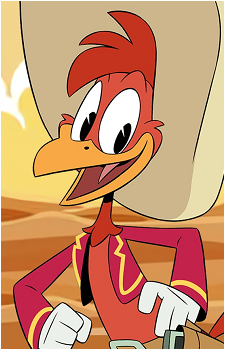
Arrange the images of the character by drag & dropping them around open_in_new
drag_indicator
drag_indicator
drag_indicator
drag_indicator
drag_indicator
drag_indicator
drag_indicator
drag_indicator
Select the 2 images you want to swap
Change the main image of the character for a specific series
The image you will choose is the one that will show up for that character when you go to the series page You can either enter an image URL or click on one to select it
Type none in the Image URL field to remove the main image of the series.
OR select an image by clicking on it
Change the main alias of the character for a specific series
The alias you will choose is the one that will show up for that character when you go to the series page
Select None in the Alias field to remove the main alias of the series.
Remove images of the character
Image (Click on them to select them)
Add art tags to the character's images
Select/deselect images you want to art tag by clicking on them.
Tip: You can mass art tag by clicking "Add current selection" then go to the Pic Tagging page and continue there.
Tip 2: You can see all uncredited images of the series on this page (also accessible via the contributor hub).
Bad images are images that you think need improvement (because of thick borders, a lot of noise etc.), not just borderless images Select them by clicking on them
Character/series/tag pages can be linked using the following format: [character:123456 Text] or [series:123456 Text] or [tag:123456 Text]. Replace 123456 with the ID of the character/series/tag you want to link to.
Spoilers can be added using the ||spoiler text|| syntax.
To add multiple descriptions to a character, add a Label using [[Text]] before the corresponding text. Click here for an example.
[[1954-1975]]
From a terrifying force of nature representing the horrors of war, to a parental figure primed for blockbuster kaiju team-ups,
Godzilla's role varied with each new Show era incarnation.
[[1984-1995]]
In 1984, the King of the Monsters' cinematic canon returned to its darker roots in Godzilla Returns.
This raging Godzilla radiated renewed menace, with a mountainous silhouette of massive dorsal fins running from its fanged face to its longest tail yet.
In the early 1940s, Walt Disney and his staff were sent by the U.S. government on a trip to Latin America to strengthen relations between the two Americas in the run-up to World War II.
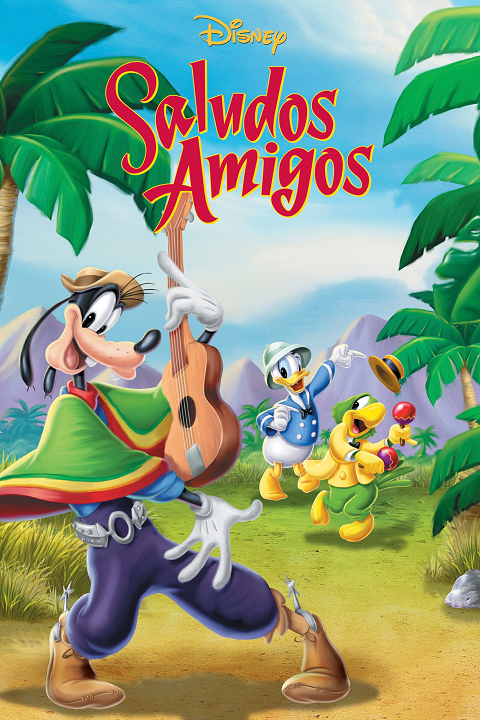
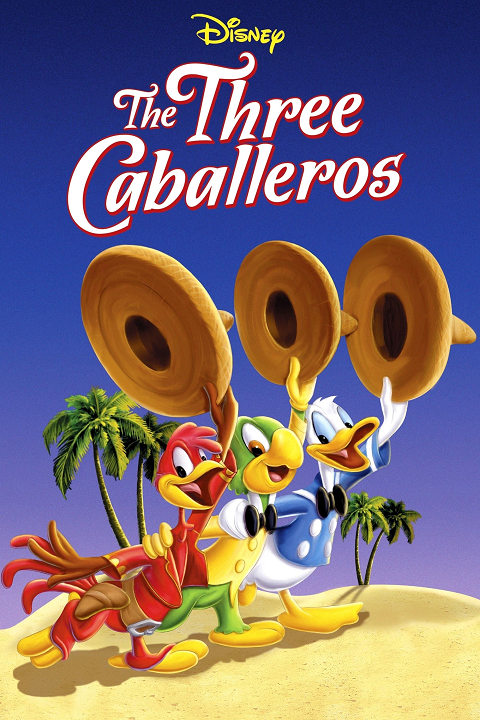
The result of this trip were Saludos Amigos and The Three Caballeros, two of the most picturesque Disney Classics, in which Donald Duck found himself in close contact with the customs and traditions of a land exotic to him.
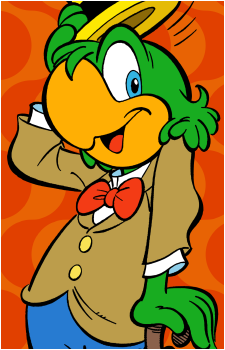
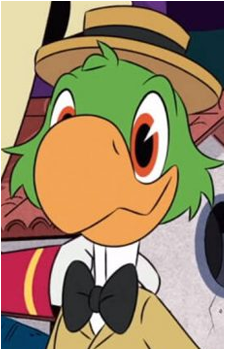
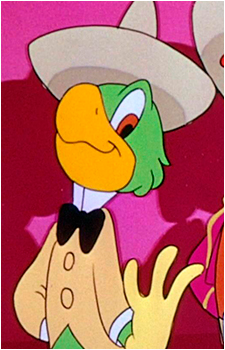
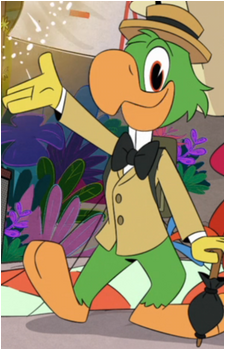
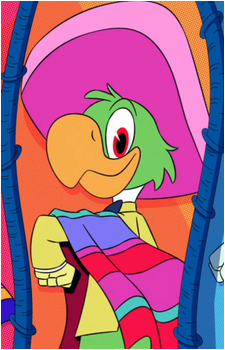
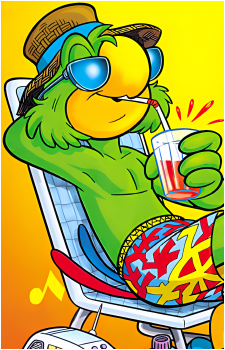
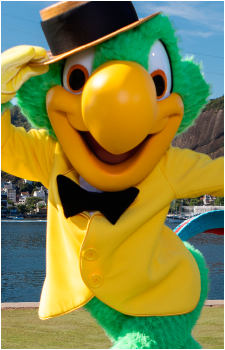
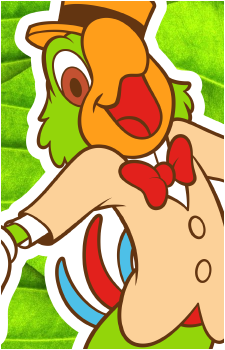
The Brazilian parrot José Carioca, followed at a later point by the Mexican rooster Panchito, became the symbol of this cultural bridge, a character that Walt's staff created to act as a guide for Donald, accompanying him through the beauties of Brazil and beyond. Cheerful, carefree... and somewhat broke, José is someone who's always trying to enjoy life, even without having the means to do so, and was strongly inspired by a parrot that shares his name, a protagonist of some popular Brazilian jokes.
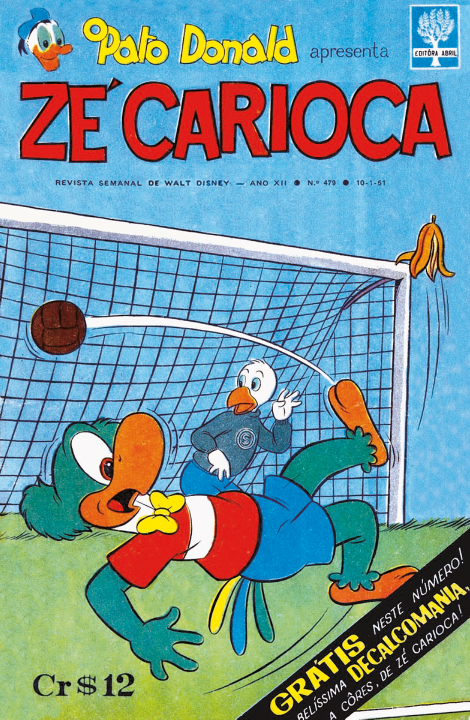
The character would also enjoy great success later on. In fact, we find him again in the animated film Melody Time and in a fine series of Sunday comic strips, in which we discover that his daily routine consists of living by his wits, trying to make ends meet between one trick and another. Later, José was also taken up by other authors, including Abramo & Giampaolo Barosso and even Don Rosa, who on a couple of occasions repurposed the trio of Caballeros to send them off on adventures in spectacular treasure hunts. But, without a doubt, it is precisely at his “home country” that the character has been better exploited, becoming a sort of local Donald Duck. In fact, in the Brazilian comics published by the Abril publishing house, a well-defined universe has been built around him, complete with friends, a girlfriend, nephews and even a secret identity!
In short, although far apart, Donald and José show us that cultural barriers do not matter, and that deep down we are all more alike than we believe.
Edit the external links of the characters
Name can be something like "Site", "Twitch"... properly capitalized.
All links must be official, no fan pages or similar.
NameURL
keyboard_arrow_upkeyboard_arrow_downdelete
add
Add a series to the character
Sort the series of the character by drag & dropping them around
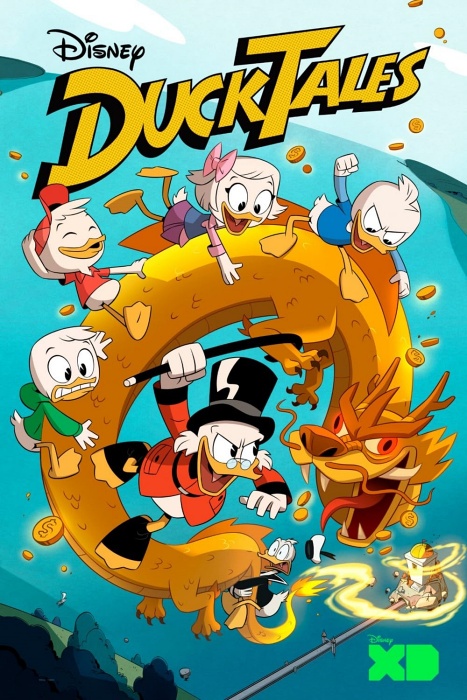
Saludos AmigosThe Three CaballerosZé CariocaDuckTales (2017)Mickey Mouse (2013)Mickey Mouse WorksMickey Mouse Mixed-Up AdventuresMickey Mouse FunhouseLegend of the Three CaballerosDonald Duck Visits Japan!
Remove the series from the character
Change the series of the character
Edit the related characters
If the character you want to add doesn't share a series with this character, you can type its exact name and select "Add [name]".
Click on a character after selecting it to spoiler it.
Edit the relation between the character and its related characters
If a single character is selected, the current relation will be overwritten If multiple characters are selected, the relation will be added to all of them Up to 5 relations per character. Spoilers are not allowed
In the early 1940s, Walt Disney and his staff were sent by the U.S. government on a trip to Latin America to strengthen relations between the two Americas in... [Read more]
In the early 1940s, Walt Disney and his staff were sent by the U.S. government on a trip to Latin America to strengthen relations between the two Americas in the run-up to World War II.
The result of this trip were Saludos Amigos and The Three Caballeros, two of the most picturesque Disney Classics, in which Donald Duck found himself in close contact with the customs and traditions of a land exotic to him.
The Brazilian parrot José Carioca, followed at a later point by the Mexican rooster Panchito, became the symbol of this cultural bridge, a character that Walt's staff created to act as a guide for Donald, accompanying him through the beauties of Brazil and beyond. Cheerful, carefree... and somewhat broke, José is someone who's always trying to enjoy life, even without having the means to do so, and was strongly inspired by a parrot that shares his name, a protagonist of some popular Brazilian jokes. Read more
The character would also enjoy great success later on. In fact, we find him again in the animated film Melody Time and in a fine series of Sunday comic strips, in which we discover that his daily routine consists of living by his wits, trying to make ends meet between one trick and another. Later, José was also taken up by other authors, including Abramo & Giampaolo Barosso and even Don Rosa, who on a couple of occasions repurposed the trio of Caballeros to send them off on adventures in spectacular treasure hunts. But, without a doubt, it is precisely at his “home country” that the character has been better exploited, becoming a sort of local Donald Duck. In fact, in the Brazilian comics published by the Abril publishing house, a well-defined universe has been built around him, complete with friends, a girlfriend, nephews and even a secret identity!
In short, although far apart, Donald and José show us that cultural barriers do not matter, and that deep down we are all more alike than we believe.